
The subdued development of mental health services has taken an incredible turn over the last few years: crisis counselors are now showing up at locations that were previously exclusively handled by police, EMTs, or paramedics. These professionals now sit in the front seat of ambulances and frequently arrive first, rather than following behind.
Counselors are not only providing support but also stabilizing lives in real time when they respond directly to mental health emergencies. The change is particularly apparent in urban areas where co-response teams are now commonplace and where law enforcement works in unison with certified experts rather than resorting to force.
| Topic | Details |
|---|---|
| Focus | Crisis counsellors becoming first responders |
| Key Strategies | Co-response teams, early intervention, embedded models |
| Typical Dispatch Types | Mental health crises, suicide ideation, domestic trauma |
| Key Programs | Crisis Intervention Team (CIT), 988 Lifeline, Telehealth Response |
| Societal Benefit | Decreased arrests, increased care access, lower ER dependency |
| Community Need | Underserved, trauma-affected, and BIPOC populations |
| Long-Term Outlook | Infrastructure expansion and funding stabilization needed |
| Cited Organizations | APA, Vera Institute, NAMI, SAMHSA |
Cities like Denver, Houston, and New York have adopted these new models in recent months, integrating mental health professionals into emergency response plans. The counselor is increasingly being called upon as the go-to expert on the scene, whether it’s a call regarding a suicidal teen, a psychotic episode in a public setting, or a worried parent who can’t calm their child.
These experts are greatly lowering the number of needless arrests by incorporating into dispatch procedures. They bring trauma-informed conversation, breathing techniques, and a remarkable ability to de-escalate raw emotion into grounded response in place of handcuffs.
By definition, counselors are trained to look past the obvious. They are very clear about how context, cultural identity, and past trauma play a part in each crisis. While a crisis counselor may see an untreated diagnosis, a recent loss, or unresolved childhood stress, a veteran police officer may see a threat.
Funding has gradually seeped into models that place mental health on par with public safety thanks to strategic partnerships between nonprofits and municipalities. Cities have established round-the-clock mobile crisis units that function with professional empathy wrapped in procedural readiness rather than weapons, flashing lights, or authority.
There are still difficulties for early-stage projects. Sometimes confusion has resulted from delayed training, unclear jurisdictional leadership, and miscommunications in dispatch. However, proponents contend that these issues can be resolved, particularly in light of the fact that these models get people to care much more quickly.
These services became even more urgent during the pandemic. Breakdowns were bred by isolation. Anxiety was triggered by loss. Additionally, 911 operators needed alternatives because emergency rooms were overcrowded. Counselors became responders—not just in title, but in responsibility—and crisis lines became lifelines.
These mental health professionals have entered the field with surprising effectiveness by utilizing trauma-informed training and making decisions in real time. Some even avoid the crowded hospital waiting rooms entirely by conducting safety planning on-site or sending patients straight to outpatient facilities.
Ten years ago, it seemed radical to think that a crisis counselor could show up in place of an armed officer. It feels especially useful now, in addition to being appropriate. It’s a clear recognition that a totally different set of tools is needed for mental health emergencies than for criminal investigations or physical trauma.
This change has been occurring in the field of education for a while. Grief counselors, who are trained to stabilize communities during times of intolerable fear, swiftly arrive following a school shooting or collective trauma. These days, the same model is being modified for housing projects, neighborhoods, and even traffic stops.
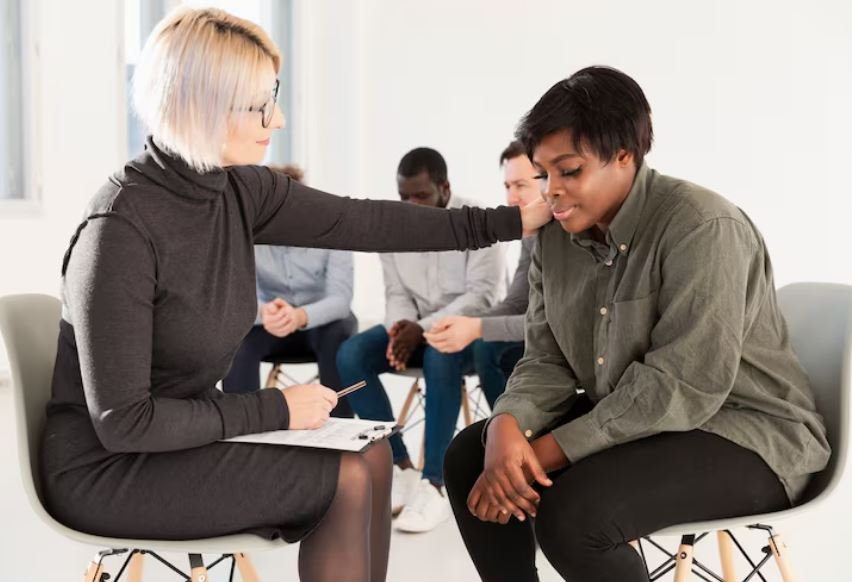
The presence of a clinician rather than a badge is incredibly healing for communities that are disproportionately affected by police interaction, particularly Black and Latino communities. It declares that assistance is available and that this suffering is genuine. To understand, not to punish.
Social work departments now collaborate with EMS through shared dispatch centers, guaranteeing integrated response. Compared to the disjointed systems of the past, where mental health care was usually provided behind closed doors and only after the fact, this is a significant improvement.
These days, some crisis counselors carry radios, ride in police SUVs, and wear uniforms. However, their tools are relational: culturally sensitive engagement, emotional control, and active listening. This dual presence—quiet compassion and visible authority—is subtly changing how communities view care.
This change is especially novel in the context of justice reform. Bipartisan annoyance has been aroused by the country’s over-reliance on prisons to handle psychological crises. These days, embedded response models provide a very dependable, data-backed substitute.
There are fewer recurring 911 calls and better follow-up on mental health referrals when behavioral health specialists are directly integrated into the public safety process. That’s fiscal responsibility as well as social progress for many cities.
The CAHOOTS program in Eugene, Oregon, has effectively diverted thousands of calls from police response, providing a startling example. Others, such as MH First in Sacramento, B-HEARD in New York City, and STAR in Denver, are using community-specific modifications to replicate that model.
Counselors have become more well-known since the 988 Suicide and Crisis Lifeline was established. Previously routed through 911 or emergency rooms, these calls now result in specialized care. That represents a substantial change in the way crises are perceived and managed.
The field is growing despite sluggish policy alignment. The bar for training is rising. Models for certification are being reexamined. With an emphasis on interdisciplinary collaboration and real-time psychological assessment, some universities are even creating tracks specifically focused on mobile crisis intervention.
The fact that the front lines of mental health care are no longer limited to clinics is becoming increasingly apparent to young people pursuing careers in this field. A routine wellness check could save a life, a dispatch request could reroute your day, and a call could arrive at midnight.
Crisis counselors are providing something surprisingly accessible and desperately needed—human connection at the brink of collapse—through community-centered practice and evidence-based care. Not just counseling, but direct, in-person presence when nothing else makes sense.
It is hoped that this strategy will be implemented nationally in the upcoming years. Crisis response for mental health issues can become as commonplace as fire safety or cardiac care with sufficient funding, legislative backing, and collaboration across sectors. It’s not a dream. Quietly, efficiently, and with extraordinary grace, it’s already taking place.
