

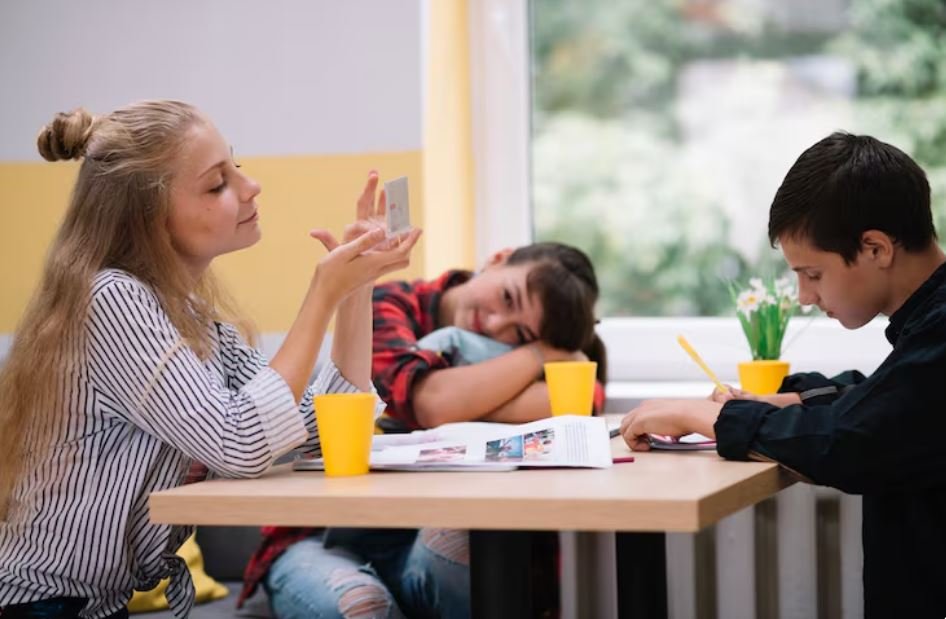
Early childhood emotional education is essential for developing the foundation of emotional intelligence; it is not a luxury. Kindergarten-bound kids are like fertile soil, ready to learn self-control, empathy, and patience. It is especially advantageous to start emotional education during this period, which experts frequently refer to as a “window of opportunity,” when the brain is incredibly flexible. The foundation for all subsequent learning is the capacity to recognize, communicate, and regulate emotions.
Early emotional instruction has been repeatedly linked to better grades, better relationships, and fewer behavioral issues, according to research from the Collaborative for Academic, Social, and Emotional Learning. Schools assist students in managing frustration, resolving conflict, and tackling obstacles with confidence by cultivating social-emotional skills. Learning emotional vocabulary early on helps children “speak” their feelings more fluently for the rest of their lives, which is remarkably similar to learning a new language.
| Aspect | Description |
|---|---|
| Developmental Focus | Kindergarten is a crucial period for cultivating empathy, emotional regulation, and social awareness. |
| Educational Value | Children with strong emotional foundations perform better academically and socially. |
| Societal Impact | Early emotional learning nurtures kindness, cooperation, and long-term civic responsibility. |
| Practical Benefits | Promotes resilience, focus, and reduced behavioral issues across school years. |
| Global Trend | Countries integrating emotional education early show notably improved classroom harmony. |
| Reference | Collaborative for Academic, Social, and Emotional Learning (CASEL) |
Teachers are extremely important in this process. Their classrooms turn into miniature versions of society, where cooperation, empathy, and sharing are modeled on a daily basis. In addition to teaching counting and colors, a good kindergarten teacher helps kids learn how to control their anger, identify sadness, and celebrate the accomplishments of others. These lessons are experienced firsthand—for example, when a child learns to share during play or soothes a sobbing classmate—rather than being recorded in textbooks.
According to psychologists, confidence is a skill that is meticulously developed via emotional stability rather than a characteristic. A child’s curiosity grows organically when they feel seen and encouraged. This has been particularly noticeable in educational institutions that combine academics and social-emotional learning. Strong social-emotional skills at age five were associated with a significantly higher likelihood of high school graduation and stable employment as adults, according to a Johns Hopkins University study. Just that discovery changes our perspective on the formative years of education.
Emotional education serves as mental health preventive medicine in many respects. By teaching kids to process their emotions instead of repressing them, it dramatically lowers their risk of developing anxiety and behavioral problems in the future. Children who are able to label their emotions—“I’m frustrated” as opposed to sobbing uncontrollably—recover more quickly and interact more positively, according to parents. Decades of emotional resilience can be formed by these microskills.
Thought leaders and celebrities have contributed their voices to this expanding movement. Through her support of early childhood development, actress Jennifer Garner has emphasized that emotional preparedness should come before academic pressure. Emotional intelligence is acknowledged by business leaders as a fundamental component of effective leadership. Microsoft CEO Satya Nadella credits his management style to empathy, which he says is best developed early in life.
Programs for emotional education that combine music, storytelling, and group reflection have been introduced in schools in Finland, Denmark, and Japan. The findings are very evident: students exhibit increased happiness and improved self-regulation. These educational systems have established classrooms where academic learning flourishes in tandem with emotional development by incorporating emotional lessons at an early age. Many countries are now keen to adopt this model.
According to the American Psychological Association, kids who receive emotional regulation training have better peer relationships and fewer disruptions in the classroom. Although initially intangible, these advantages add up to quantifiable academic advancement. Emotionally educated students listen more intently and work together more easily, according to teachers, which is a subtle but profoundly transformative effect.
In order to extend emotional education outside of the classroom, parents are also very important. The first emotional classroom is the home, where patience and empathy are shown on a daily basis. Simple yet incredibly powerful strategies to support emotional development include reading aloud to children, recognizing their emotions, and setting an example of calm communication. A child’s sense of safety and belonging is greatly enhanced by a loving, emotionally stable home.
A surprisingly beneficial role for technology has also been discovered in emotional learning. Children can learn how to read facial expressions, cultivate empathy for characters from different backgrounds, and practice mindfulness with the aid of educational apps and interactive stories. When used purposefully, these resources can enhance conventional instruction by reiterating cooperative and compassionate lessons in innovative, captivating ways.
It is impossible to overestimate the influence of emotional education on society. Early instruction in empathy and compassion helps schools raise a generation that is less likely to bully others and more likely to work together. Perhaps the most important skill of all in a time of polarization and rapid change is empathy. The same skills that adults employ to navigate teams, relationships, and communities are being practiced by children when they learn conflict management techniques on the playground.
