

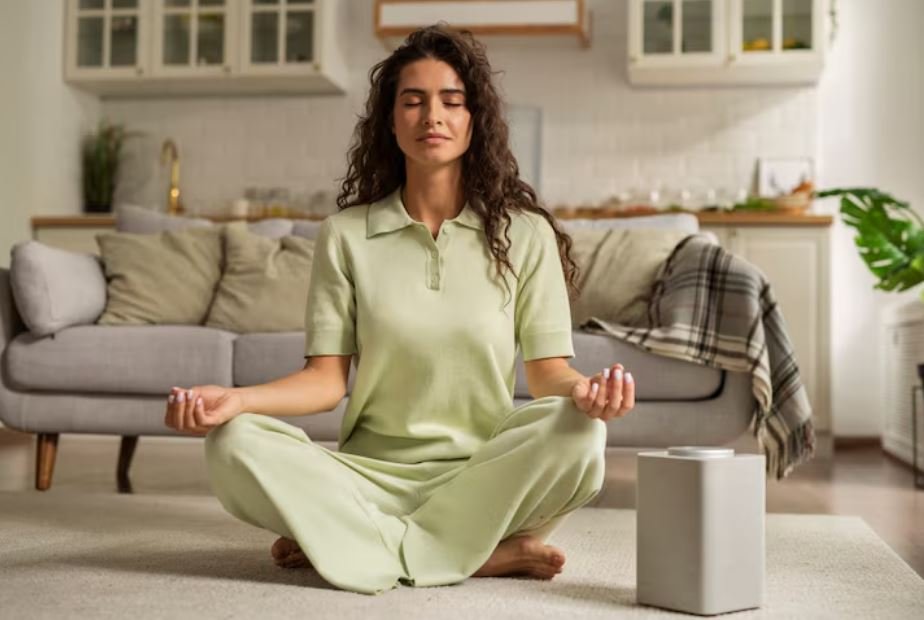
The discourse surrounding mental health has changed dramatically in recent years, moving from peaceful meditation spaces to immersive digital clinics, sound therapy studios, and ice baths. Psychologists, neuroscientists, and even business executives who are looking for more adaptable and useful tools for emotional resilience are now embracing what once seemed fringe or experimental. The transition beyond mindfulness is about broadening the scope of what healing can look like in daily life, not about giving up meditation.
Mindfulness apps became the go-to remedy during the pandemic, when routines fell apart and mental tiredness subtly increased. Millions of people attempted to meditate through anxiety, but many discovered that silence actually made their discomfort worse rather than better. This insight prompted researchers and therapists to look for novel techniques that are incredibly successful at stimulating the senses and calming the mind. VR-based emotional training, rhythmic sound baths, and ice immersion therapy have become unexpected but potent allies in contemporary psychology.
| Aspect | Details |
|---|---|
| Concept | Modern mental health care is expanding beyond mindfulness, exploring unconventional yet evidence-backed methods such as equanimity training, sound therapy, ice immersion, and virtual interventions. |
| Focus | Highlights how science, creativity, and technology are collectively shaping a more adaptive and inclusive approach to emotional wellness. |
| Key Drivers | Pandemic burnout, digital fatigue, and the growing need for accessible, innovative healing tools. |
| Cultural Shift | From individual meditation practices to social, tech-driven, and sensory-based wellness models that foster connection. |
| Reference Source | www.frontiersin.org |
This evolution was highlighted in a National Institutes of Health study. Gaëlle Desbordes and her colleagues suggested that researchers measure equanimity, or the even-minded steadiness that enables people to remain composed in the face of discomfort, rather than mindfulness itself. The concept of mental balance is being redefined by this small but important distinction. According to their definition, equanimity is a developed capacity to maintain composure in the face of unforeseen circumstances rather than passive detachment. Once developed, this mental muscle can resemble physical endurance quite a bit.
Therapists now use this framework to integrate practical emotional training with mindfulness. According to neuroscientific research, equanimity training significantly reduces activity in brain regions associated with stress and fear and improves the regulation of emotional reactions. This is physiology demonstrating that, like strength, calmness can be trained, not theory.
Organizations’ perspectives on mental health are changing as a result of collective approaches. In order to teach groups how to remain present and adaptable together, Dr. Jutta Tobias Mortlock of the City University of London developed the idea of team mindfulness training. In high-stress settings where emotional synchronization can save lives, such as military teams, emergency response units, and hospitals, this model has proven especially helpful. According to her research, group-based mindfulness programs can foster collective resilience that lasts longer in addition to being just as effective as individual ones.
This new wave is also being amplified by celebrities. Lizzo frequently talks about using sound therapy to “reset the nervous system,” while Hugh Jackman attributes his ability to maintain “sharp and steady” focus to immersion in cold water. Their candor indicates a wider acceptance of non-traditional care that combines personal ritual and science. This combination of clinical validation and celebrity endorsements has significantly increased public confidence in new treatments that were previously written off as fringe.
For example, sound therapy has established itself in clinical psychology. According to studies, low-frequency vibrations directly affect the body’s relaxation response by stimulating the vagus nerve. Because it turns sound—something emotional and imperceptible—into a biological healing tool, it is especially inventive. While astronauts use sound-based interventions to manage stress in confined spaces, music therapists now work in hospitals to treat pain and post-traumatic stress disorder. These applications have a profoundly scientific and poetic feel.
The role of technology has also become very evident. Once only used for gaming, virtual reality is now used to treat chronic anxiety, PTSD, and phobias. In order to desensitize fear and reframe emotional memories, patients are led through immersive environments. Digital therapies that monitor breathing patterns, facial tension, and heart rate and adjust difficulty in real time have been developed by companies such as OxfordVR and Limbix. Younger patients who find traditional therapy intimidating have benefited most from these programs. It’s a remarkably contemporary method that emphasizes interaction over introspection.
Once thought to be the enemy of concentration, social media is now being used as a teaching tool. These days, licensed therapists and mental health educators share brief psychological insights on Instagram and TikTok. Even though they are short, these videos provide millions of people who might never visit a clinic with daily grounding tools. It’s a subtle but impactful illustration of how technology has democratized access to mental health advice.
Long disregarded as a self-help cliche, journaling has been subtly reimagined thanks to digital tools. AI is used by functional journaling apps to analyze emotional tone, assisting users in identifying emotional cycles and stressors. These platforms make reflection more structured and insightful by utilizing data and introspection at the same time. It feels incredibly effective, transforming introspection into a supervised therapeutic process.
Experiences of collective healing are also becoming more popular. People are rediscovering the comfort of shared rhythm through activities like sound baths and group breathing circles. These events combat the loneliness that frequently exacerbates anxiety by promoting empathy and connection. According to psychologists, social activities can be especially helpful in reestablishing emotional safety, particularly for people who are recuperating from burnout.
Athletes are now ardent supporters of this change. NBA player Kevin Love supports programs that teach young athletes that mental health is just as important as physical fitness by combining mindfulness, virtual reality therapy, and physical training. Proactive care works better than reactive treatment, as evidenced by schools implementing similar programs reporting significantly better focus and fewer behavioral problems.
These results are still being supported by science. Unconventional therapies like creative arts, cold exposure, and team-based interventions have been shown to have neurological effects similar to those of long-term meditation, according to a 2023 Frontiers in Psychology study. Higher connectivity between the brain regions in charge of emotion and decision-making was demonstrated by the participants, indicating that variety in therapy may be just as crucial as consistency.
These results increase mindfulness rather than lessen it. While meditation is still fundamental, the modern evolution incorporates digital interaction, sound, movement, and temperature. It’s a highly adaptable healthcare ecosystem that is influenced by customization rather than prescriptions. Stillness can heal some people, while motion, rhythm, or immersion can heal others. This adaptability is indicative of a more progressive and inclusive understanding of mental health.
By combining design, empathy, and neuroscience, contemporary wellness has emerged as a creative frontier. These days, therapists work with artists and technologists to create sensory-rich, mind-calming experiences. A new era of innovatively based healing is represented by VR landscapes that replicate the sounds of forests, wearable technology that vibrates subtly during panic attacks, and soundscapes that are synchronized with heart rhythms.
A more humane strategy that celebrates diversity, values inquiry, and promotes experimentation is what’s emerging. Beyond mindfulness, there is not rejection but reinvention: a reminder that emotional equilibrium can only be achieved by being open to trying new things rather than sticking to one approach. As creativity and science come together, mental health is evolving into what it ought to have always been: intensely individualized, incredibly powerful, and infinitely flexible.
