

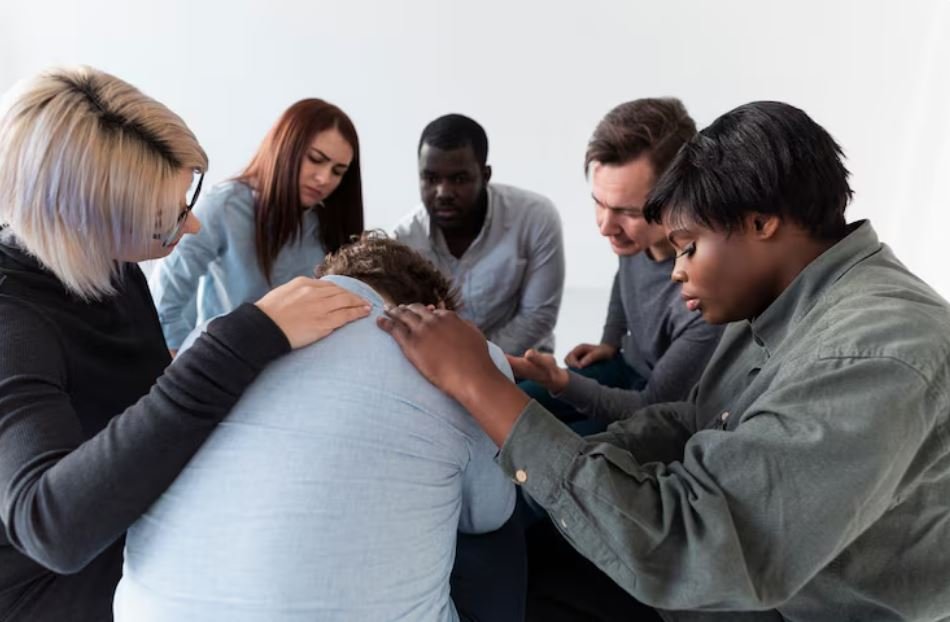
As the emotional glue that holds people together when ideologies, systems, and structures fall short, empathy has emerged as a remarkable force in mending divided communities. It makes it possible for people to transcend their own limitations and sense the pulse of another’s experience, resulting in a web of understanding with a profoundly evident impact. Empathy’s quiet power turns disjointed neighborhoods into networks of support and collaboration where listening is just as important as taking action.
Empathy acts as a stabilizing current during turbulent times. It shifts attention from isolation to a common goal and from conflict to connection. This power was vividly displayed by communities recovering from the COVID-19 pandemic. Neighbors organized food drives, mental health check-ins, and mutual aid networks throughout cities and small towns. These grassroots movements were driven by empathy rather than by policy. Such communities recovered significantly more quickly, both economically and emotionally, according to Taylor & Francis researchers, demonstrating that human connection is still a crucial component of resilience.
| Aspect | Information |
|---|---|
| Core Focus | Empathy as the foundation for rebuilding trust, unity, and resilience in communities |
| Key Benefits | Promotes inclusion, reduces conflict, and inspires cooperation across differences |
| Primary Drivers | Shared understanding, emotional intelligence, social connection, civic engagement |
| Practical Impact | Strengthened social bonds, faster recovery after crises, and sustainable civic harmony |
| Influential Voices | Fred Rogers, Oprah Winfrey, Dalai Lama, Brené Brown, Barack Obama |
| Research Sources | Taylor & Francis “Rebuilding Communities with Empathy,” TheraHive 2024 Report |
| Reference | Taylor & Francis Online – Rebuilding Communities with Empathy |
“Look for the helpers,” as As the emotional glue that holds people together when ideologies, systems, and structures fall short, empathy has emerged as a remarkable force in mending divided communities. It makes it possible for people to transcend their own limitations and sense the pulse of another’s experience, resulting in a web of understanding with a profoundly evident impact. Empathy’s quiet power turns disjointed neighborhoods into networks of support and collaboration where listening is just as important as taking action.
Empathy acts as a stabilizing current during turbulent times. It shifts attention from isolation to a common goal and from conflict to connection. This power was vividly displayed by communities recovering from the COVID-19 pandemic. Neighbors organized food drives, mental health check-ins, and mutual aid networks throughout cities and small towns. These grassroots movements were driven by empathy rather than by policy. Such communities recovered significantly more quickly, both economically and emotionally, according to Taylor & Francis researchers, demonstrating that human connection is still a crucial component of resilience.
“Look for the helpers,” as Fred Rogers once said, seems especially timeless today. His message encapsulated empathy in action rather than sympathy. Helpers are people who choose to care and make others feel seen; their titles don’t define them. Their empathy spreads and their presence becomes a lifeline in times of crisis. Real reconstruction is started by this silent exchange of compassion, not by large-scale actions but by innumerable small ones.
Empathy has been referred to as “the bridge between people” by psychologists such as Dr. Brené Brown, who emphasizes that true connection necessitates bravery. It challenges us to listen without bias, to acknowledge suffering without passing judgment, and to lean into discomfort. Conflict has considerably decreased in communities that embrace empathy-driven communication, such as Minneapolis’ restorative listening initiatives following social unrest. Those who previously stood apart are finding common ground, and those who previously felt unheard are finding validation.
Because empathy triggers a collective transformation, this process is remarkably effective. According to neuroscience, empathy causes the brain’s mirror neurons to fire, resulting in the development of understanding and trust. People’s defensive barriers come down and sincere conversation starts when they feel appreciated. Therefore, empathy is physiological as well as emotional. One discussion at a time, it uses biology to create peace.
Public leaders have long recognized the value of empathy in society. Oprah Winfrey has referred to it as “the great connector,” imploring viewers to look past their own comfort zones and toward our common humanity. Barack Obama frequently described “radical empathy,” which necessitates listening to people who disagree with you, as crucial to leadership. The Dalai Lama also compares empathy to a muscle that needs to be worked out every day in order to stay strong. Their voices, which come from diverse backgrounds but share a common message, demonstrate how empathy can be used as a universal tool to restore civic trust.
Additionally, empathy has been shown to be especially helpful in educational and professional settings where inclusivity and teamwork are critical. By establishing organized areas for in-depth listening and introspection, initiatives like TheraHive’s Empathy Cafés turn workplaces and educational institutions into supportive communities. Across all sectors, the outcomes have been remarkably similar: higher morale, less burnout, and a revitalized sense of purpose. These initiatives show how deliberate empathy practice can be extremely effective in promoting both emotional health and productivity.
In Christchurch, New Zealand, one of the most potent instances of empathy-driven reconstruction took place. Architects, citizens, and civic leaders collaborated to create recovery plans following the 2011 earthquake that placed equal emphasis on urban development and emotional healing. They reenvisioned their city as a communal act of kindness through open storytelling sessions. In addition to rebuilding infrastructure, that process restored a sense of belonging. Since then, the strategy has sparked comparable projects in Canada, Puerto Rico, and Japan, where communities are realizing that reconstruction without empathy is just rebuilding walls rather than trust.
Nowadays, one of the best environments for developing empathy is education. Young students are invited to observe and discuss the emotions of infants as part of the “Roots of Empathy” program, which is being implemented in schools across Canada and beyond. The program has significantly improved classroom cooperation and decreased bullying. It demonstrates that empathy is learned, developed, and reinforced over time rather than being innate. As a result, the next generation is being taught to connect as well as compete.
Empathy is changing the way that stories are told in media and entertainment. Movies like The Pursuit of Happyness and A Beautiful Day in the Neighborhood show empathy in action and encourage viewers to view vulnerability as strength. Through their activism, well-known individuals like Lady Gaga and Angelina Jolie spread similar messages, promoting empathy as the cornerstone of international collaboration. Their advocacy is a sign of a cultural change: success is now determined by one’s capacity to uplift others rather than just one’s wealth or influence.
However, empathy flourishes in everyday life and is not limited to celebrity activism. Using only empathy and smartphones, locals in Louisiana, many of whom are still troubled by Katrina’s memory, established neighborhood-based rescue networks during hurricanes. In real time, they arranged for food, shelter, and emotional support. It was just the result of our common humanity; no formal order required it. These acts demonstrate how empathy functions as a remarkably resilient kind of civic energy that can support communities both during and after times of crisis.
There are also measurable advantages to empathy. According to a 2024 TheraHive report, communities that prioritized empathetic dialogue saw a 30% decrease in reported local conflicts and a 40% improvement in social cooperation. The results highlight the concrete ways in which emotional intelligence can improve civic engagement, making empathy both ethical and useful.
However, empathy needs to be intentionally fostered. It calls for bravery in reconciliation, humility in disagreement, and patience in listening. But it has a remarkable knock-on effect. According to researchers, empathy is “socially contagious”—one act of understanding frequently motivates another, greatly increasing its impact. This dynamic is evident in grassroots initiatives such as youth activism and local food banks. An entire ecosystem of relationships can be changed by a single act of empathy.
Fred Rogers’ message is still relevant today: kindness transforms when it is practiced every day. When empathy takes the place of indifference, communities recover. When listening takes the place of assumption, trust is restored. And when we prioritize connection over rivalry, progress quickens. The evidence is overwhelming: empathy is a hard skill for collective survival rather than a soft virtue.
Empathy serves as a stabilizing force for societies navigating economic strain, environmental uncertainty, and division. It reinterprets resilience as compassion in action, leadership as service, and justice as comprehension. Rebuilding communities via empathy is about creating a more humane future rather than going back in time.
Empathy turns suffering into meaning rather than erasing it. Although it doesn’t solve every problem, it lays the groundwork for everything. And as history has demonstrated, empathy continues to be our most replenishable resource, from postwar Europe to contemporary cities recuperating from crisis. Communities not only rebuild, but also reimagine what it means to belong when they choose to understand instead of judge. once said, seems especially timeless today. His message encapsulated empathy in action rather than sympathy. Helpers are people who choose to care and make others feel seen; their titles don’t define them. Their empathy spreads and their presence becomes a lifeline in times of crisis. Real reconstruction is started by this silent exchange of compassion, not by large-scale actions but by innumerable small ones.
Empathy has been referred to as “the bridge between people” by psychologists such as Dr. Brené Brown, who emphasizes that true connection necessitates bravery. It challenges us to listen without bias, to acknowledge suffering without passing judgment, and to lean into discomfort. Conflict has considerably decreased in communities that embrace empathy-driven communication, such as Minneapolis’ restorative listening initiatives following social unrest. Those who previously stood apart are finding common ground, and those who previously felt unheard are finding validation.
Because empathy triggers a collective transformation, this process is remarkably effective. According to neuroscience, empathy causes the brain’s mirror neurons to fire, resulting in the development of understanding and trust. People’s defensive barriers come down and sincere conversation starts when they feel appreciated. Therefore, empathy is physiological as well as emotional. One discussion at a time, it uses biology to create peace.
Public leaders have long recognized the value of empathy in society. Oprah Winfrey has referred to it as “the great connector,” imploring viewers to look past their own comfort zones and toward our common humanity. Barack Obama frequently described “radical empathy,” which necessitates listening to people who disagree with you, as crucial to leadership. The Dalai Lama also compares empathy to a muscle that needs to be worked out every day in order to stay strong. Their voices, which come from diverse backgrounds but share a common message, demonstrate how empathy can be used as a universal tool to restore civic trust.
Additionally, empathy has been shown to be especially helpful in educational and professional settings where inclusivity and teamwork are critical. By establishing organized areas for in-depth listening and introspection, initiatives like TheraHive’s Empathy Cafés turn workplaces and educational institutions into supportive communities. Across all sectors, the outcomes have been remarkably similar: higher morale, less burnout, and a revitalized sense of purpose. These initiatives show how deliberate empathy practice can be extremely effective in promoting both emotional health and productivity.
In Christchurch, New Zealand, one of the most potent instances of empathy-driven reconstruction took place. Architects, citizens, and civic leaders collaborated to create recovery plans following the 2011 earthquake that placed equal emphasis on urban development and emotional healing. They reenvisioned their city as a communal act of kindness through open storytelling sessions. In addition to rebuilding infrastructure, that process restored a sense of belonging. Since then, the strategy has sparked comparable projects in Canada, Puerto Rico, and Japan, where communities are realizing that reconstruction without empathy is just rebuilding walls rather than trust.
Nowadays, one of the best environments for developing empathy is education. Young students are invited to observe and discuss the emotions of infants as part of the “Roots of Empathy” program, which is being implemented in schools across Canada and beyond. The program has significantly improved classroom cooperation and decreased bullying. It demonstrates that empathy is learned, developed, and reinforced over time rather than being innate. As a result, the next generation is being taught to connect as well as compete.
Empathy is changing the way that stories are told in media and entertainment. Movies like The Pursuit of Happyness and A Beautiful Day in the Neighborhood show empathy in action and encourage viewers to view vulnerability as strength. Through their activism, well-known individuals like Lady Gaga and Angelina Jolie spread similar messages, promoting empathy as the cornerstone of international collaboration. Their advocacy is a sign of a cultural change: success is now determined by one’s capacity to uplift others rather than just one’s wealth or influence.
However, empathy flourishes in everyday life and is not limited to celebrity activism. Using only empathy and smartphones, locals in Louisiana, many of whom are still troubled by Katrina’s memory, established neighborhood-based rescue networks during hurricanes. In real time, they arranged for food, shelter, and emotional support. It was just the result of our common humanity; no formal order required it. These acts demonstrate how empathy functions as a remarkably resilient kind of civic energy that can support communities both during and after times of crisis.
There are also measurable advantages to empathy. According to a 2024 TheraHive report, communities that prioritized empathetic dialogue saw a 30% decrease in reported local conflicts and a 40% improvement in social cooperation. The results highlight the concrete ways in which emotional intelligence can improve civic engagement, making empathy both ethical and useful.
However, empathy needs to be intentionally fostered. It calls for bravery in reconciliation, humility in disagreement, and patience in listening. But it has a remarkable knock-on effect. According to researchers, empathy is “socially contagious”—one act of understanding frequently motivates another, greatly increasing its impact. This dynamic is evident in grassroots initiatives such as youth activism and local food banks. An entire ecosystem of relationships can be changed by a single act of empathy.
Fred Rogers’ message is still relevant today: kindness transforms when it is practiced every day. When empathy takes the place of indifference, communities recover. When listening takes the place of assumption, trust is restored. And when we prioritize connection over rivalry, progress quickens. The evidence is overwhelming: empathy is a hard skill for collective survival rather than a soft virtue.
Empathy serves as a stabilizing force for societies navigating economic strain, environmental uncertainty, and division. It reinterprets resilience as compassion in action, leadership as service, and justice as comprehension. Rebuilding communities via empathy is about creating a more humane future rather than going back in time.
Empathy turns suffering into meaning rather than erasing it. Although it doesn’t solve every problem, it lays the groundwork for everything. And as history has demonstrated, empathy continues to be our most replenishable resource, from postwar Europe to contemporary cities recuperating from crisis. Communities not only rebuild, but also reimagine what it means to belong when they choose to understand instead of judge.
